Hotels have been caught in the middle of the Trump administration's large-scale immigration operation in Minnesota this winter and the protests in response, but hotel CEOs are trying to stay above the fray.
An estimated 3,000 Immigration and Customs Enforcement (ICE) agents are reportedly in the Minneapolis-St. Paul area, boosting hotel occupancy but also drawing demonstrations outside properties where they're staying.
Protesters don't want hotels hosting ICE agents, creating tension between corporate policy and on-the-ground sentiment, and in some cases, safety concerns.
In early January, Hilton removed the Hampton Inn Lakeville in Minnesota from its system (Hampton is a Hilton-owned brand) after a video appeared to confirm that the hotel was refusing to accommodate ICE agents.
Hilton said the Hampton Inn Lakeville's actions "were not reflective of Hilton values" and that its hotels "are open to everyone, and we do not tolerate any form of discrimination."
Marriott CEO Anthony Capuano has the same viewpoint.
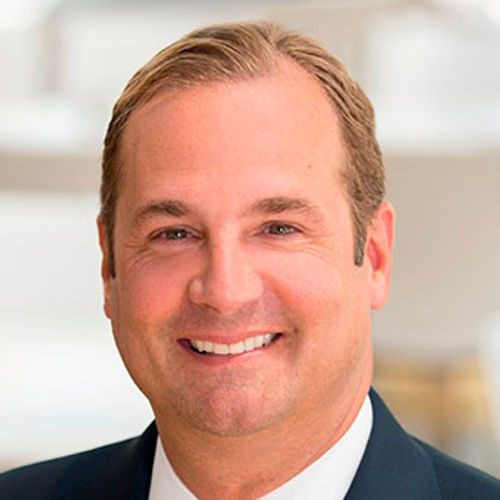
Anthony Capuano
During a media event this week at the Americas Lodging Investment Summit in Los Angeles, Capuano said hotels shouldn't determine who is welcome to book a room.
"It's a slippery slope if hotel people start deciding who's welcome and who isn't," Capuano said during the Jan. 26 roundtable. "We have, for nearly a century, operated through the notion that of course we're going to be compliant with local, state and federal law, [while prioritizing] the safety and security of our associates and our guests."
Nevertheless, Capuano acknowledged unease among hotel staff in markets where immigration enforcement has intensified.
"Anecdotally, I hear from lots of our general managers who are doing what they do best, which is wrapping their arms around their associates, giving them comfort that we're going to stand by them," he said. "It would be naive to suggest there's not concern out there, and that concern is ratcheting up."
He also emphasized that Marriott maintains "very rigorous screening processes to ensure that we've got documented workers" at hotels and that the company provides similar training to franchise partners.
The Hampton incident was one of several involving Minnesota hotels. A demonstration held outside of the Home2 Suites by Hilton near the University of Minnesota led to arrests and the deployment of flares and tear gas, the Minnesota Daily campus newspaper reported on Jan. 25.
The protestors were demonstrating against the hotel housing ICE agents.
On Jan. 18, two St. Paul hotels owned by the Mille Lacs Band of Ojibwe tribal government — the DoubleTree St. Paul Downtown and InterContinental St. Paul — announced temporary closures, citing "elevated safety and security concerns." DoubleTree is part of Hilton's brand portfolio, while InterContinental is part of IHG Hotels & Resorts.
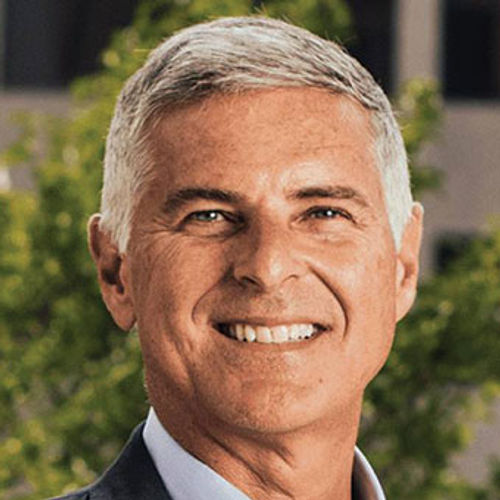
Chris Nassetta
At a Hilton media roundtable in New York earlier this month, CEO Christopher Nassetta said the St. Paul properties received bomb threats. According to reports, the hotel received threats because ICE agents had reservations to stay there.
"They were getting bomb threats, and they did not feel comfortable operating the hotel in those circumstances," said Nassetta.
Addressing protestors' concerns, Nassetta said, "We're a welcoming place for all. The minute we start trying to call balls and strikes, where would it end? We are not going to get into politics and the division that's going on."
Training for hotel staff
The heightened enforcement environment has prompted hotels to implement comprehensive staff-training protocols, according to Yariv Ben-Ari, chair of the Real Estate Hospitality Practice at New York law firm Herrick Feinstein.
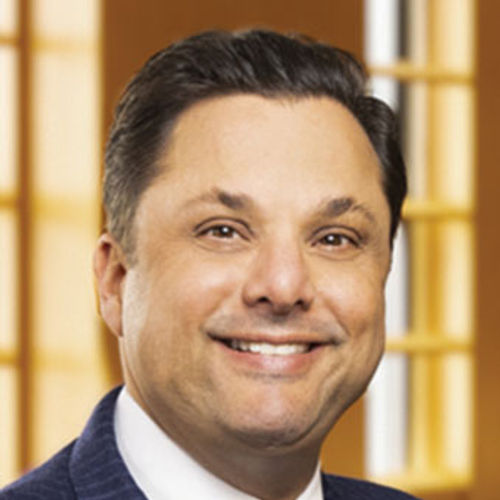
Yariv Ben-Ari
"There's a big, big focus on training the staff all the way from the front door through the back of the house on what to do should law enforcement show up, be it ICE or any other agency," said Ben-Ari, adding that effective training should cover what access a staff needs to provide to law enforcement and what access they don't, as well as "how to engage with law enforcement and those who may be opposed to law enforcement being there."
Ben-Ari added that properties should ensure legal counsel is available so staff can call with questions.
"Staff needs to have the availability of somebody to answer questions on the spot," he said. "At the end of the day, a hotel is a place of business. You're there providing a service, and you need to treat everybody who comes into your establishment with respect and courtesy, because it's the hospitality industry."
Gains at Minneapolis hotels
Despite the recent turmoil, CoStar data for Minneapolis-St. Paul shows year-over-year gains in RevPAR, with increases of 17.3%, 22.2% and 17.4% for the weeks ending Jan. 3, Jan. 10 and Jan. 17, respectively.

Isaac Collazo
Isaac Collazo, vice president of analytics for CoStar's STR subsidiary, attributed the gains not only to ICE agent stays but to an influx of protestors and media.
Despite the short-term performance gains, Collazo said there's the risk of a damaged reputation for the Twin Cities as well as a perception in other countries that the U.S. isn't a safe place.
"But people do forget," he added. "And if there's such a thing as a nonsophisticated and sophisticated traveler, the sophisticated traveler is still going to come."